Showing posts with label Carl Livingston. Show all posts

Wednesday, May 02, 2007

Cemetery Tour, April 27, 2007

What Were Caverns Employees Doing Poking Around
Carlsbad Cemetery on Friday Evening, April 27, 2007

Wait! Please do not call the police or the Carlsbad Center for Bizarre Behavior Analysis. The group had gathered to engage in historical research; the visiting of the cemetery markers of four of the most significant people in caverns history—caverns explorer/guide/promoter Jim White, caverns promoter/writer Carl Livingston, caverns photographer Ray V. Davis, and caverns Superintendent (1927 – 1946)/booster Thomas Boles

The group gathered around 6:00 p.m. on the beautiful evening. The group included Rob, Jimmie, Jim, Jason, Ron, Don, Darrell, Greg, Bridget, Susan, Jamie, Shannan, Tom, and Linda. After a few introductory comments, I asked the cheerful group to follow. I also decided, fearing a sudden drop in tour attendance, not to mention the "shadowy figures" dressed in older clothing" who were walking in a group at the back of the tour.

We headed toward the marker of Jim and Fannie White. As luck would have it, all the markers were with easy walking distance. From a distance, I pointed out White's markers just beyond a couple crypts (someone yelled out that he had just seen some "bloods"). As the group approached, I slowed the group down to a crawl (getting them down on their stomachs) to generate “cemetery suspense” and a “lake eerie” type of feeling and to help them get a close nose smell of the grass.
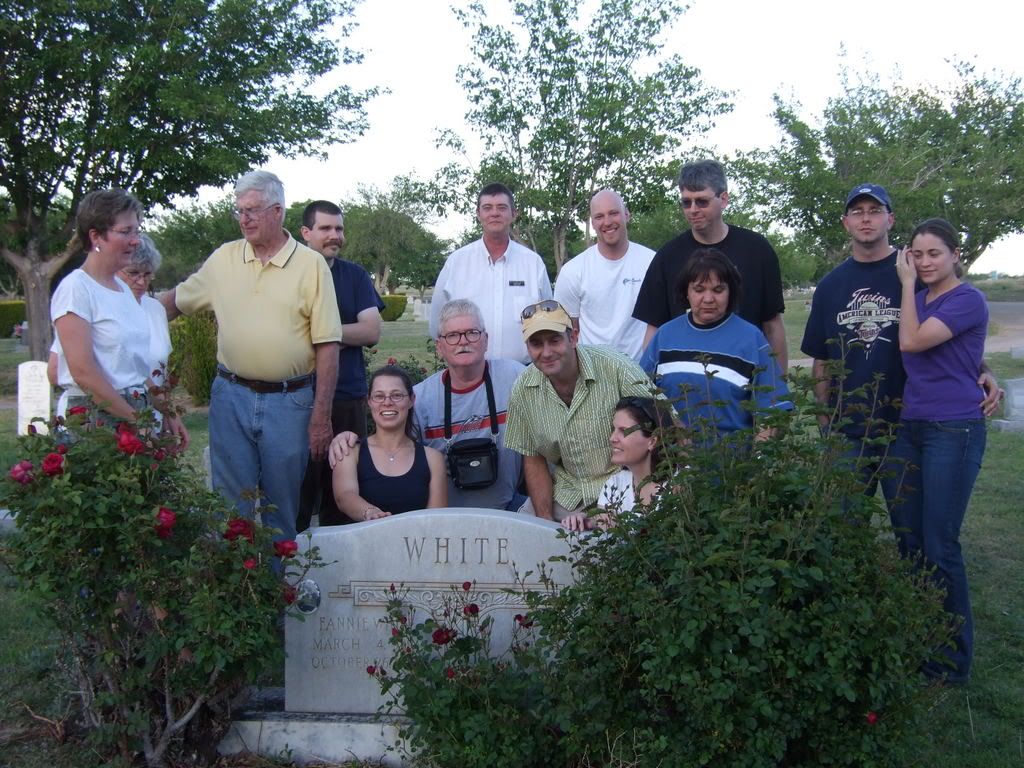

I (it is always "I," isn't it Bob?) explained that flowers had once covered the entire marker to keep would-be vandals from discovering the grave site of Jim and his wife Fannie. Jim died in April of 1946 and his wife Fannie died in October of 1964.

Is this not a great-looking bunch of people? Before leaving the site, we took a by hand polls and unaminously concluded that a fine looking physical tour group of specimens we were and there was no sense denying it out of modestly or whatever.
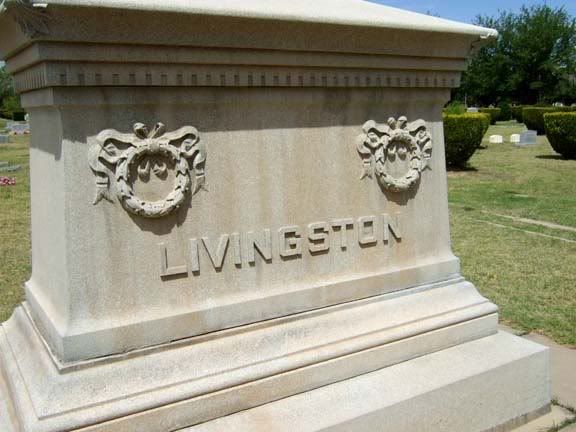


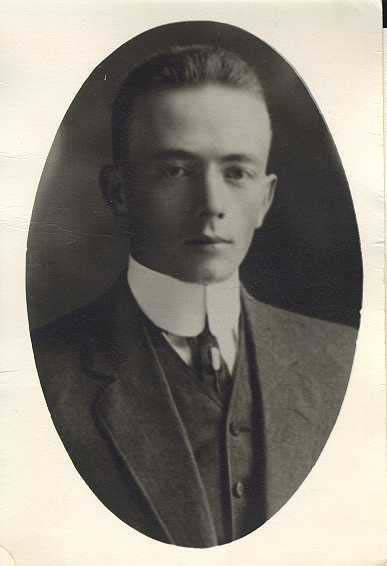
The huge Living family monument is right smack dab in the center of their family plot. Carl B. Livingston (see http://carlsbadcavernshistory.blogspot.com/ for July 27, 2007) was born in 1889 and died in 1947 at the age of 57 or 58. He was a member of the 1924 Willis T. Lee Expedition and a writer of articles about topics in area, including my favorite article on Jim White, Through the Carlsbad Cavern with Jim White. and a kay archeologist. For a paying job, he was a lawyer and later in his career became the Assistant Attorney General of Nuevo Mexico. His Dad Morgan for a time was a rich ranch and cattle owner, but depression and drought wiped out his financial fortunes.
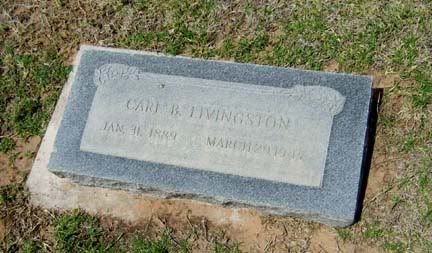


Leaving the Livingtons. By the way, Mr. Carl B. wrote very interestingly and his articles are worth pursuing.
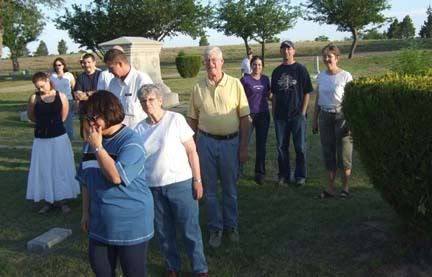
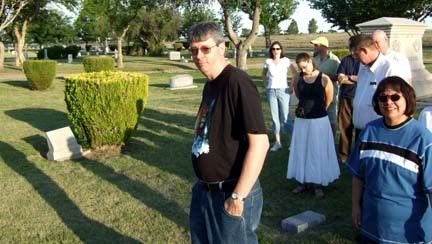


Don and Susan enjoying the sunset glaring into their eyes. By the way, Susan added some very interesting historical stories to the tour.
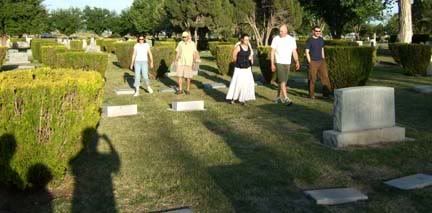


Look!! Those shadows again.
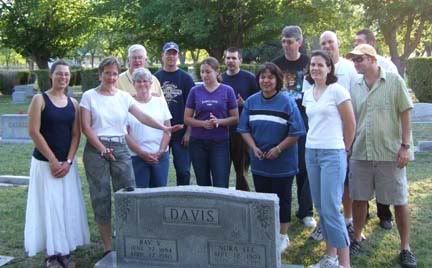


At caverns photographer Ray V. Davis and his wife Nora's marker. Mr. Davis died in 1980 and his wife passed away in 1988. Shannan, arm outstretched, organized the group for the picture. Jamie, to Shannan's right, organized the whole tour. Thanks to all who helped!!
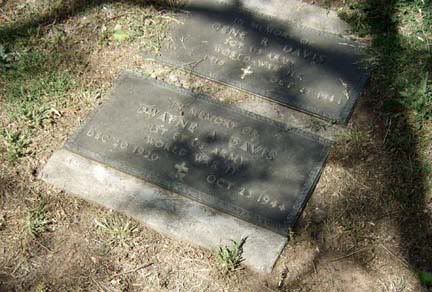

Mr. Davis had two sons from his first wife; in WWII the two sons served in the 200th Coastal Artillery in the Phillipines. The 200th was made of mainly men from New Mexico and Texas. Both men were captured and placed in what became known as the Bataan Death March. In October 1944 both of Mr. Davis' sons were on an unmarked Japanese POW ship headed to Japan. American pilots sank it and over a thousand men, including Eugene and Dwayne, perished.
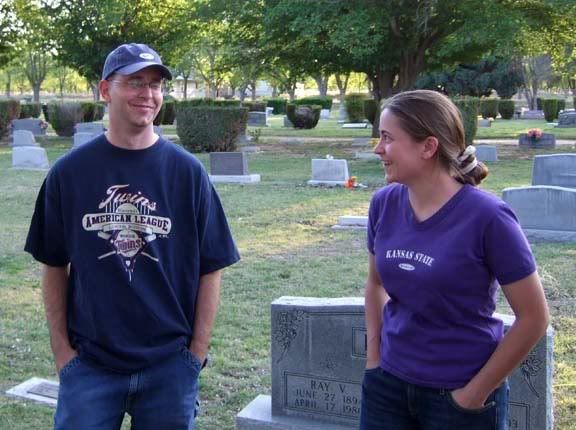


This is my favorite picture from the tour. I love the look of appreciation that this married couple is giving each other.
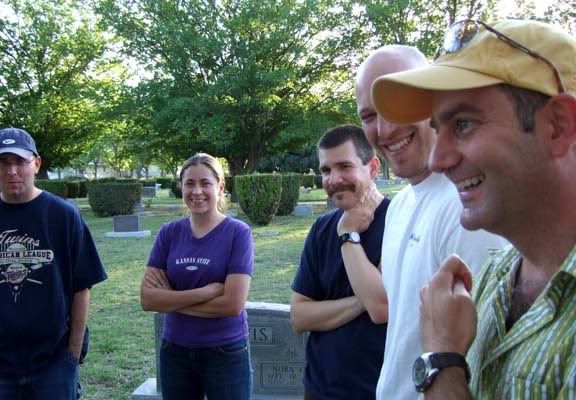


Discussing history in general at the Davis gravesite.
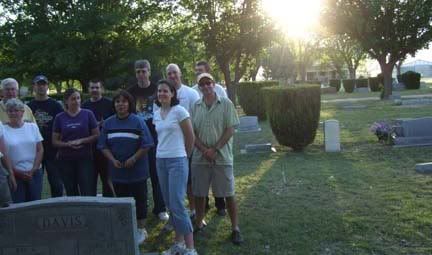


Sun beginning to set at the Davis marker.
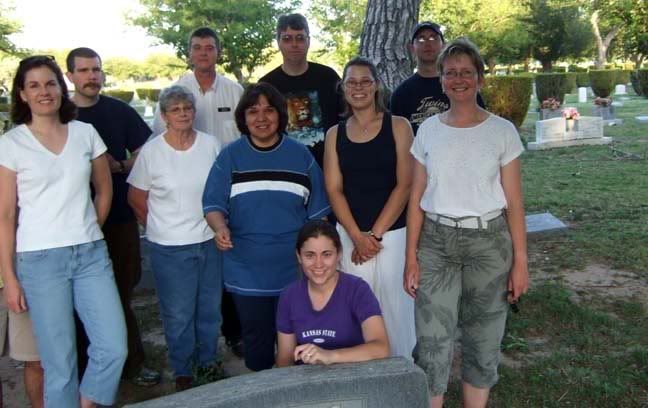


"Ansel" Hoff misses inscription on Tom Boles gravemarker.
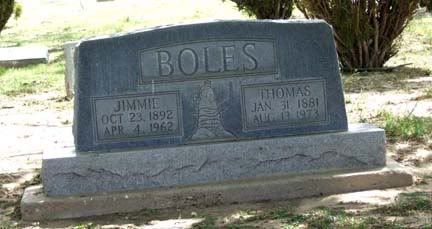


A picture that I took earlier in the day.


Most of us went to eat at the Bamboo Garden after the tour. I enjoyed being with this group and hope to do another such tour in the near future. Bob Hoff

Friday, April 27, 2007

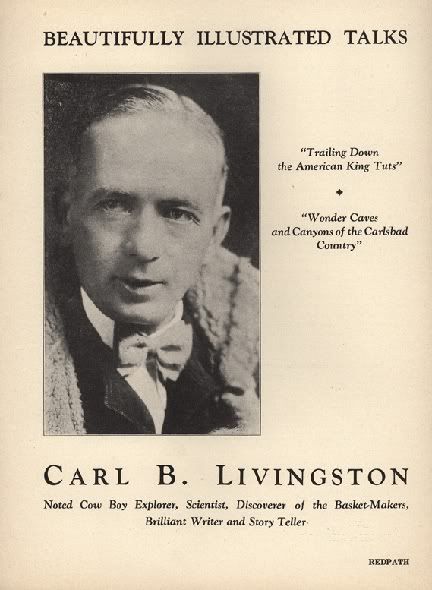
Carl Livingston, Man of Many Interests--and Author of Wonderful Article on Jim White


A brochure from Carl Livingston's later years. The following are excerpts from Livingston's obituary as it appeared in the Santa Fe New Mexican on April 12, 1947.

Interment services for Carl B. Livingston, legal advisor of the state oil conservation commission, who died suddenly Saturday of a heart attack, were to be held this afternoon at 3 at the family plot in the Carlsbad cemetery, Carlsbad. Funeral services were held at Memorial chapel here yesterday afternoon with the Rev. Joe B. Scrimshire in charge.

Livingston, author, lecturer and lay archaeologist, was born near Carlsbad. He prepped at the Roswell Military Institute and then at Staunton Military academy in Virginia. A boy in a 10-gallon hat and high-heeled boots and fresh out of the cow country, he was amazed and puzzled at the consternation when it was found by the faculty that he packed a knife with an eight-inch blade.

Livingston’s lifelong interest was in ceaseless roaming of the mountains of his native country, but called upon by his parents to choose a profession, he flipped a coin as to whether it was to be doctor or lawyer. The bar won and he took his degree in 1913 at the University of Virginia Las school. He was a Phi Kappa Alpha.

Returning to the West, he opened a law practice at Carlsbad in 1916 with Robert Dow, onetime attorney general and now general counsel for the farm credit administration.

In 1919 Livingston was a member of the state house of representatives, being one of the youngest men to hold that office at the time.

From 1920 to 1926 he practiced law in Carlsbad. For years the caverns had been a prime interest and when Dr. Willis T. Lee of the U. S. geological survey was assigned to the territory on another subject, Livingston made a “cavern convert” of him and the latter succeeded in interesting the National Geographic society to the extent of a $16,000 grant.

In this connection, the depression of the early 1920’s liquidated Livingston as a millionaire ranch owner(I think that the millionaire ranch and cattle owner was Carls's father, Morgan--Bob HoFF, 4/27/07) and by coincidence, he had come to Carlsbad, where sold his favorite saddle for $45, on the day when the Lee exploration party arrived. Livingston was promptly made first assistant

One of the legends Livingston disposed of was that the caverns had been discovered by Jim White, a well-known southwestern character, in 1901, Livingston often pointed out the cavern was on the route of the forty-niners and that his folks had known about the place in the 80’s. Livingston himself was so familiar with those haunts he would often tell of his embarrassment when, in guiding a party for the first time after the caverns had been electrically lighted, he became lost.

In 1926 when Robert Dow became attorney general, he named his partner as assistant and Livingston served for the two-year term. Returning to Carlsbad, he took up the lecturing, two years of which were spent on the staff of the Redpath bureau when he spoke in all parts of the country.

During this period and later he contributed to various magazines such as the Blue Book, the Wide World magazine of London, the New York Times Midweek Pictorial and the Cattleman. He was, for a period, a special correspondent of the Times and his numerous articles to the New Mexico magazine made valuable additions to Southwest lore.

His discovery of the Basketmaker race of 40 or so centuries ago, which placed them at least 2,000 years earlier than the Cliff Dwellers, was outstanding, especially for a layman who carried his point through sheer persistence.

A lover of camping and the outdoors, Livingston was indifferent to hunting; he preferred instead, to enjoy the spectacle of nature.

One of Livingston’s idols was Will Rogers whom he knew in the days when Rogers chummed up with Clay Macgonagill, another noted character.

In 1928 he became assistant state land commissioner and counsel under the late Frank Vesley, serving for four years and again under the late Frank Worden and also Ray Rogers. In 1938 he took the post of legal adviser to the state oil conservation commission.

He is survived by his wife, Mrs. Lillian Livingston, nee Mill, whom he married in May, 1932, at Socorro; three sons, Carl B. Jr. of Carlsbad, Leon and Robert Morgan; a daughter, Nancy Coral, his mother of Carlsbad; two brothers, Marvin of Hemet, Calif., and Joseph of Carlsbad.
(

The 1926 article below is undoubtedly one of my favorite writings about Jim White and the early cave. For me, nothing brings Jim White and early cavern activity into better focus. This article was entered in the Congressional Record during the political process resulting in the establishment of Carlsbad Cave National Monument on October 25, 1923 by President Calvin Coolidge. Bob Hoff, 4/27/07)


Through The Carlsbad Cavern with Jim White

by Carl B. Livingston

“Everybody please step up and write your names on the register,” announced Jim White, “so we'll know you’re not left when we come out!” Jim is the first explorer and the head guide of the largest cavern in the world—the Carlsbad Cavern of New Mexico. The cavern was made a national monument by the proclamation of President Coolidge about two years ago.

We were waiting a couple of hundred feet down in a great funnel-like pit, the natural opening to the cavern. It was 10 o’clock in the forenoon. Upward was a rim of yellow cliffs and a splotch of turquoise sky; downward was space, eternal darkness and silence.

The gate slid open and the crowd passed within; the gate closed and was locked with an ominous click—we were severed from the world, with our destinies weighing on Jim White and his staff of guides.

An excursion of phantom shadows, fairy realms and ghostly stalagmites: giant hallways, skyscraper ceilings and pits of hell-four hours of which brought us to rest in the huge chambers of the lower chamber.

“We’re 3 miles back and 840 feet below the surface,” remarked the explorer, as he lit a fuse that began to sputter from the end of a magnesium flare. “Course we could go down nearly a thousand and maybe keep a-goin’, but—”

Before he could finish the flare burst into a vivid white light like a prolonged flash of lightning. The inky cloud overhead dissolved and we saw the jeweled ceiling high above and the cliff-like walls standing far apart; the flare burnt out and once more depressing darkness closed in close around the cluster of lanterns.

“How did you ever manage to find your way into the lower chambers,” I asked.

“Me and Pete Smith,” Jim answered, “went off on a rope over the jump off in the big room and landed here in the lower chamber.”

“This lower chamber is just another colossal room under the big room; but we had reached the “basement” by the safe-and-easy route of the “dude”—through steps down a sinkhole in the door of the big room. Then a maze of winding passages and alluring hallways had led us into the great open space where we now stood in the middle of the lower chamber.”

While the flare was burning, a jump-off had been pointed out as the great, ring-like hole a hundred feet overhead and several hundred feet in diameter. And Jim White and his comrade, Pete Smith had gone that perilous route.

“Comin’ back out on the rope,” continued Jim, “I was kinda scared for Pete, because long toward the top he sorry kicked and fought the air. We had two ropes hangin’ side by side; on one we would pull ourselves up a foot or two at a time, and at the same time the fellows helpin’ us on top would jerk up the slack in the one that was tied to us. We made it back out without a scratch.”

“But,” he added, “before either of us topped out, we both was mighty near all in. And if it’d been another yard or two, I guess we’d a been down here yet.”

Jim White is not the explorer with the pith helmet, tight-legged pants, and horn-rimmed glasses—but the genuine article of cowboy tradition. There is a difference between the “high-brow”explorer with money and prestige as speedsters to fame, and the prowess of the pioneer who blazes the way over new horizons with just nothing save a step that is true and a light in his eye that knows no fear. There was no crowd of reporters to hang on Jim’s every word. Had he failed in his purpose, there would have been none of the soothing ointment of consolation that comes to explorers of position in the shape of “victorious defeat” when they do not succeed. Had Jim been killed, he would not have been a national martyr in the cause of science, but just a “durn” fool—he did succeed though and the hats are off to him.

Jim White does not talk much, except to a few, and not very often then. And I have it straight that what he says is not “windys” invented to entertain the “dudes” and that there is much else he does not think worthwhile to mention-incidents that would still be a thrill alongside those of an elephant hunter.

We had heard so much about the cavern we craved some of the simple facts from those who had really done the work, and we drew him out as best we could.

He was a sturdy-lean figure and even drawl. Down in the land of the unreal—of stalagmites and gloom—he sat cross-legged on the ground in the manner of the men of the range country; and while he deftly rolled cigarettes from the “makings,” he glanced back over the vista of his life and recounted with little concern experiences that would lay the basis for a new Arabian Nights.

It was learned that a mining company had once conducted extensive operations in removing from the cavern vast deposits of guano in the half-mile section around the entrance. Said Jim: “Twenty-five years ago I landed the first stick o’lumber upon the hill to build the shacks.”

“We always knocked off on Sundays and when the weather was bad—then was the time we explored! We had a happy-go-lucky bunch, too. Some of the boys used to love to set around all day and play cards, smoke and spit, and cuss until the air was blue. Others didn’t seem to get so much of a kick out of it, and a few of them used to go exploring with me.”

Sometimes his “pal” Pete went long; other times it was Lige Hill and Henry Samples, who are now guides and “know the cave like a pocket in a shirt and have been on the job ever since they have been yearlings.”

“We’d never bite off mor’n we could chaw,” was their maxim. Only a little at a time did they explore, and when known landmarks became firmly fixed in mind, they would push on farther.

In the early part of our visit we had followed a safe, zigzag trail through a gruesome pit, 150 feet deep, aptly called the “Devil’s Den.” The walls were so precipitous and irregular that the first attempts with no trail and without knowing what lay ahead, must have been a horror.

“That was the hardest part o’ the whole thing,” Jim declared. “Finally I made it across the Devil’s Den, and before I went on I made five or six trips across trying to find a better way.”

We had next followed for several blocks through a colossal hall whose ceiling often rose so high as to be out of range of even the pocket searchlights. The official survey found the height to be about 300 feet—a ceiling high enough under which to stand a fair-sized skyscraper.

“Long there,” Jim related, “we just kinda felt our way as we went. An’ I didn’t think much about danger until a mile back we run across the skeleton of a man layin’ like he’d fell off a big rock. That nearly queered the whole business with me—for a while at least. I thought I’d cut it all out and say I’d seen enough, but all of a sudden I just went on and I found the King’s Palace.”

What is known as the “King’s Palace” was recalled as a series of four great, mystic chambers whose decorations must have been patterned by nature after the myth of fairyland.

“And for a long time I thought the King’s Palace was as far as the cave went, but one day while back there we climbed up a steep hill into that big crack and follered it till it quit, and there was the big room.”

“We spent a night and a part of two days wanderin’ around over the big room, like bein’ turned aloose out in a canyon pasture on one long dark night with only oil torches for lights. Durin’ then we come up on the edge of a bluff, the jump-off, and that was all I'd started in to tell.

“But how did you keep from gettin lost?” I asked. “With this,” Jim replied, picking up from the floor a piece of rotten strong, which had strung through portions of the cavern years ago as he made his exploration. We remained in appreciative silence, and resumed, “The guano had been a hundred feet deep around the natural opening, but finally we begin to reach the rocks in the bottom. The works shut down, and everybody blowed up and left, but I kept hangin’ on.”

“Then I hit on the idea of takin' people through the cave to show ’em the sights, but I never expected to see such a crowd as all o’ this!” waving a hand at the throng.

We were informed that miles more of the cavern was then explored; but people who lived right at the entrance did not believe that the cavern was so stupendous a thing. Only a few came to visit what may with propriety be called “the eighth wonder of the world,” and not much impression was made on very many of these.

The fuse that set off the rocket of publicity by which the cavern became known is a young man by the name of Ray V. Davis, who came out and took many pictures of the cavern. Some of these photographs came into the hands of a Mr. Robert A. Holley of the United States Land Office, and he made a preliminary survey for the government. Soon thereafter the cavern came speedily to the attention of others of influence, which resulted in the creation of a national monument.

We had entered by cavern by a tediously long, but safe, stairway through the new natural entrance, which route is “the way de luxe” as compared with the perils of the old entrance. During the mining days the guano had been hoisted out of the cavern through a shaft punched through the roof.
Later for some time the shaft was used as the entrance for tourists. The descent was 180 feet through sheer space, in a mining bucket on the end of a steel cable.

“But we never did have any accidents around the cave,” explained Jim, “except once in the mining days when a drunk man come stumblin’ along and fell heels over head into the shaft. I was froze with fear, but the bucket, loaded with filled sacks, happened to be comin’ up and was just enterin’ the hole in the roof. Then up came the bucket and clingin’ on was our friend—when he put his foot on solid ground he shore was sober!”

Having seen a rat scamper across the floor of the big room, I inquired, “Have you ever seen life of any kind as far back as the lower chamber?”

“Yes, and farther, too—we chased a cave cat through this very room less’n a year ago; bones of other little animals have been picked up about as far back as anybody has ever been. It looks like there may be another entrance we don’t know anything about.”

“What do you consider the strangest thing during your explorations?” another queried.

“A runnin’ stream down herein the lower chamber when Pete and me went over the jump-off in 1906. It run till 1907. When we have a few more wet years maybe the stream will start flowing again.”

“And once I was walking along through a place in the cave we call Pipe Springs and I bumped into a stalactite; it broke off, and a stream of water gushed out like a hydrant open.”

“What was the closest call you ever had?”

“Once, when we used to use torches I was carryin’ some kerosine oil in a gunny sack slung over shoulder. The oil sprung a leak. Walkin’ just behind me was a feller carryin’ one of them blazin’ torches. The first thing I knew the man let that torch touch the rack and my pack started going’ up in flames and me tied to it! I had a time breakin’ loose from the pack, but I didn’t get burnt too much.”

“Speakin’ of bein’ excited, a priest that weighed 300 pounds went as far as the Devil’s Den, took a look, didn't like the look o’ things, and gave up the trip. That was the days when we pulled ’em up in the bucket. When the priest was about half way up, somethin’ happened to the engine, and we had to stop and leave him where he was for a minute or two; then we started to let him back down under perfect control of the brakes, and I could hear him mumblin’ something like a prayer.”

“It’s funny how much alike most people are. In the first part of the cave where there is nothing pretty every crowd hollers, ‘Oh, isn’t it marvelous!’”

“Also nearly everybody asks if I don’t think that this cave is connected with every other cave in this part of the country.”

“People are imitators—one starts to peckin’ on somethin’, and then they all will start poundin’ on whatever is handy. That’s the reason we don’t allow any walkin’ sticks brought into the cavern, because they get to usein ’em for clubs.”

“People love to write their names. This is strictly agin the rules—to write on the scenery. They don’t seem to realize that it took thousands of years for these formations to make.

“In the old days, when we used to let ’em take out a few souvenirs people was great hands to lug out a lot o’ junk to the surface where they would get a look at it and throw it away.”

“When a crowd starts into the cavern, we always give ’em the once over to see if anybody looks like he might not make the trip. It always makes ’em mad to turn ’em down and we hate to do it. Some even try to slip through. Once a man with wood feet got by us when we used to use the bucket and shaft. He didn’t go far—I found him layin’ by the trail near the Devil’s Den and I packed him back out.

“A couple of schoolma’ams showed up at the cavern with a dog. To see what he would do, we let him foller ’em through—and he kept right up with the crowd.”“Among the queerest that have ever been around here was the scientists. I didn’t pay much attention to them at first, but I found that every once in a while they would tell me somethin' that would keep me laughin’ for a week.”

“When we first built the stairway, a few people slipped into the cave before we could get the gate up. Up in the big room we run across a feller showin’ his girl the cave-he was carryin’ a lantern with one mantle broke off and with the other side barely danglin’ on. And when we asked him, he didn’t think anything about fallin’ through a sinkhole or perambulatin’ off over the jump-off.”

“And down here in the lower chamber another man was found wanderin’ around by his self. He didn’t seem to know that he could have strayed off and got lost in some of the lanes where we do not go for several days and maybe months at a time. That’s why we have visitors to register and why we keep the gate locked—we never take a chance on losin’ anybody.”

It was time to start back out and the crowd began to move. “Hay-a-a,” Jim called to a group that had started on. “You’re goin’ the wrong direction-back the other way!”

“You see,” he added, “how easy it is to get turned around. Who can tell which way is north?”

As many guessed one way as another, and we fully realized the satisfying feeling of safety in having such men as these guides, who know the cavern “like a pocket in a shirt.”

While we paused on a hill for a renewal of breath, Jim confided that he had just finished paying out a home by “herding dudes” through the cavern, he had a wife that could cook and a boy in school.

“But little Jim (now age 88--Bob Hoff, 4/27/07) is not to be a cave explorer when he grows up, because the job’s too dangerous for what you get out of it, and besides there won't likely be anything left to explore by then.”

At last upon the surface, the sinking sun was spreading a panorama in cerise and purple across the heavens. Following Jim, the waiting cars slipped away, one at a time, through the shadows into the desert back to town—Carlsbad—the starting and ending point, where we left our pilot of the underground to be picked up by the next party with the same curious ideas and funny questions.


© Bob Hoff, 2007

Friday, December 22, 2006

Dana Lee's Diary

Note: Google Documents and Spreadsheets for some reason wouldn't let me post this file to the web so I am putting it in its' own post.

12/22/06 Annotation—Willis T. Lee’s son Dana and daughter Elizabeth accompanied him on the March – September 1924 expedition (day-trips only) of the caverns and surrounding area. Dana kept this diary, a primary historical document that better helps us to understand the events of that time.

Mr. Dana Lee returned to the caverns forty-three years later to visit and to share information. His sister returned in the late 1930s and the early 1950s.

THE NATIONAL GEOGRAPHIC SOCIETY'S EXPEDITION

TO CARLSBAD CAVERN, NEW MEXICO

MARCH 20 TO SEPTEMBER 15, 1924

A DIARY AND RECORD OF THE EXPEDITION

BY DANA LEE


THE NATIONAL GEOGRAPHIC SOCIETY'S EXPEDITION TO CARLSBAD CAVERN,
NEW MEXICO MARCH 20 TO SEPTEMBER 15, 1924-A DIARY AND RECORD OF
THE EXPEDITION

By Dana W. Lee, member of the expedition, and son of Dr. Willis T. Lee the expedition leader. [Dr. Lee was on leave of absence from his regular employment as a scientific geologist with the U.S. Geological Survey during this period]

Carlsbad Caverns, N.M.

March 24, 1924

We GOT INTO Carlsbad last Thursday, March 20, after a trip of 3 days and 3 nights. We passed through a snowstorm on the way, but found Carlsbad very mild and bright. We were met at the station by the Chamber of Commerce of Carlsbad. They offered their aid in the furtherance of our project. We went to the hotel that night. Friday morning, we went out to Mr. Carl Livingston's house, and soon it was arranged to rent his house for the summer. We then unpacked our things and got settled. In the afternoon, Mr. Runyan and myself drove out to the caves. The road is in good condition for about half way. Then it is merely a track, or rather a number of tracks, across the plain. The worst part of the road begins about 3 miles from the caves. Here we go straight up the side of the foothills. The road is just a place dug in the rock and rocks piled up along the lower side to keep the car in the road. The rocks are very jagged and the road seep and sidling. It is the worst combination imaginable. With the Rucksteel axle [on the Model T Ford] we managed to get the car up all right. Then there is about three miles of very rocky road. Just a place over the rocks where the cactus has been taken out. The cactus is very abundant and there are many varieties. There are also a number of kinds of spiny plants that are very interesting. I stayed at the caves Friday night and then returned in the morning. Dad bought a lot of things to take out and we went to camp Saturday afternoon. I went right up the hill without a stop. Dad walked up behind. Sunday we went cave exploring. Mr. Runyan and two men started the survey of a branch cave that we hope will come near enough the surface to enable us to have a tunnel cut in. In carrying a can of gasoline, Runyan split some of his clothes and the constant rubbing of the can soon caused a rather severe burn. Dad, Jim and I went on through a passage we thought might make a better trail but found that it was too rough. We visited some parts that have not been entered for 8 years. There was an old cord on the floor that was so rotten that it fell to pieces at the lightest touch. Some places we crawled under boulders that had fallen from the roof. The cracks were just big enough to allow a man to get through. Then when we had passed through and reached the cave itself, we were unable to see the roof in many places, even with a powerful flashlight. Any little noise reverberated through the passage and so we heard, rather than saw, the immense size of that hole in the ground. We visited the big room and saw the big totem poles, many of which are 50 feet high while only about 2 feet in diameter at the base; and also the domes, some of which are at least 100 feet high and about as wide at the base. We went into a little side room where there were about hundreds a little stalactites hanging from the roof. They were still forming and at one place the water flows down a stalactite in a stream the size of a pencil. There is a tin cup there and we all had a drink at this unique fountain. Some of the trail is very steep and hard to climb. There are wires strung along and with the help of lines, one is able to worm his way over the rocks to the top. We crawled out about 3 o'clock. Jim and I climbed the ladder, coming out, and then Jim started the engine and pulled Dad out in the bucket. Runyan and his helpers came out about 5 o'clock and we found him so badly blistered that it was necessary to take him to town. He rode in the seat with me, and Jim rode on a bag in the box behind. We made good time, and got in at 8. The doctor called the case a 1st degree burn, and said it would be necessary to stay in town 2 or 3 days. Monday I loaded the car and drove out with two men to work the trail. Tuesday we worked trail all day. There are 6 men on the trail besides Jim and myself, and one man is doing the cooking. We filled many sacks with loose dirt; tied them and then rolled them down the Den to make a trail. Two men would place them in proper order, and they make a fine trail. We came out for dinner and on the way back again took in a load of empty sacks.

March 26
Today I again joined the road gang and filled sacks. We made a trail part way down the far side of the Den. Once a rock fell down to where the men were working, but no one was hurt. We climbed out each time today. Once we made it in less than a half hour from the far side of the Den. Tonight the first bats came out. Only a hundred, and Mr. Bailey was unable to catch any. He took the temperature in the cave and found it to be 55 degrees F.

March 29
On the 27th, Dad and I went down into the cave with the plate camera. Exposures were made with both the flash powder and the magnesium blow-lamp. They were all good pictures. Dad went to town on the 28th, and I went out with Mr. Bailey to see him set traps. We went only into a canyon north of camp and he set traps for skunks. We then went down the canyon and poked into two little caves on the side of the canyon. On the way back we looked at the set traps and found a rock squirrel in one of them. With parts of the squirrel as bait, we set other traps and re-baited the old ones. He also set traps for mice and Kangaroo Rats. The man from the International News Reel arrived that evening. On the 29th we went to take moving pictures of the cave. We went to Shinav's Wigwam first and took four shots of the decorations. We had the men who are working of the trail to hold the flares and to serve as measuring. The flares last one minute and are very bright. From two to five flares are used to make the pictures.

The wind is still blowing a little today. Last night we had quite a high wind. The little shacks here shook under the blasts, and every loose piece banged and flapped. Mr. Bailey came back tonight with a skunk and a ring tail that he had caught in his traps. The skunk put up a fight and splattered him a little. He first put him to sleep with ether and then tied him to a stake in the open. When the skunk awoke, Mr. Bailey took pictures of him, but the skunk got away. Mr. Bailey then chased him around and finally stunned him with a rock and then killed him. I watched him stuff the skunk tonight. The man from El Paso came out today and brought Elizabeth an Mr. Runyan. Runyan is still very sore and will be unable to work for a time yet. The big Hudson car had a great deal of trouble making it here, and he is going to leave it below hereafter. The trail is very much improved now. About the entire trail in the Den is laid in dirt sacksnow. In some places they are held by iron stakesset in the rock to hold them on the steep hill. Today they worked near the junction at the head of the Big Room. They hope to improve the path where the rocks have fallen from the roof.

March 30, 1924
We went into the cave today and took more pictures. We went into the big room and took the totem pole and nearby stalagmites first. Then we made several more shots including the Temple of the Sun and one of the domes. Elizabeth went with us and served as the "life action" in the pictures. Tonight we went out to watch for the bats, but non came out. This is so strange, for it was a fine night for them.

April 2
When we woke up on March 31, we found the explanation for the failure of the bats to appear. It had turned cold during the night, and our wash water froze over. The bats know much more about the weather than men do. That day we took more movies of the Wigwam and of the Big room. Mr. Bailey set a trap for a coyote up on the ridge south of camp. Betty and I drove into town that night. Next day [April 1] I gathered up my radio set and brought it out to camp. The surveying party found that the cave that they had hoped would go south really came east so that it is almost back to the main cave. Today I stayed on top and worked on the radio set, went out with Mr. Bailey drove the Dodge car down the road and back a couple a times to get used to it and gathered some cactus. I got a fine big "melon" cactus and planted it in my cactus garden. Mr. Bailey took pictures of the cactus wren on its nest. Not a good pose but hopes it will show something. The surveying party went on into the passage, and found that it narrowed into a small hallway, rather wet, adorned with many queer formations unknown in other parts of the cave. They had to wade once, and at one place water of considerable depth can be seen through a crack, They found rock macaroni strung from the roof, and queer white pebbles in the water. They figured out their position on returning, and find themselves to be 1000 feet south a little west of the guano shaft. Yet they climb all the way into the Big Room and out the regular was to get out. 2 and a half hours to get 1000 feet away!! It is hoped that they will find a short cut. They are evidently on a lower level of the big cave. They found fresh bat guano, so they must be near an outside entrance, though perhaps it is this one at camp.. The trail gang went back yesterday. They have greatly improved the trail, leaving only one mean place, the hole under the fallen boulder. There were 20 in camp a few days ago, our highest number yet. We are now only 10, as Dad has gone to town for a day or so.

April 3
Last night the boys in the bunk house were startled by a loud thumping and rattled or rolling stones. They rushed out of the house and thought that Mr. Bailey had fallen off the ladder while entering the cave. They came over here and found him safe so they began to look around to see the cause of the commotion. Finally they found that one of the burros had cotton his hind legs tangled in an old bed near camp and in his struggles had started the stones down the canyon and against the engine house. Dad returned today and brought some coal to use for cooking. He and Mr. Bailey got out the skunk and photographed him. Dad got a roll of movies of the skunk and then the skunk took a shot at the two shooters, but no direct hit was made. I went in with the surveyon today, and helped run the line back into the small cave leading back under the ridge south of camp. It is very narrow but there are some unusually formations and all of them look so clean and unsoiled. No wonder as they have been seen but three or four times by man. I watched for bats tonight, but only about 75 appeared. Mr. Bailey fears that they have left this cave for other parts.

April 8
Sunday and Monday we spent in the Wigwam taking pictures, Elizabeth and I posed in the pictures and Dad took them. He used hypersensitized film for some and ordinary film for others. He also tried out the Panoram camera. With lanterns for light, he used 14 and 28 minutes exposure, and with magnesium flares one minute only. We found some lime formation as thin as parchment. It was very translucent, and looked about like thin waxed paper when a light was put behind it. It had been formed as a skim on the top of a spring. Runyan has been surveying the land over the cave today. He will extend Teeter's map of this region. I have been working on my radio set today, as Dad and Mr. Bailey went to town I expect to get it going tonight.

April 9
Radio set is not working yet. It would be unusual if it did. Mr. Bailey went over to spring last night and shot one bat. Both the gun he was using and the one Elizabeth had jammed after a few shots so they had to use regular game shells. He is going over in Garden Canyon soon and get some more. I went out with Runyan today and held the stadia rod. It was rather cold and very windy, a good day to work below rather than above the ground. The men went to Walnut Canyon today and got 200 walnut ladder rungs. Jim is going to make a 200 foot wire ladder to get to the bottom of the "jump off" at the end of the big room. It is raining tonight, just a slow gentle drizzle. It is the second rain here since I came, the first being on my first night out here in camp. We saw some bunch cactus today that we estimated to be over 500 in number of cylinders, that is, separate cactus plants. We also saw a great horned owl setting on its nest in a hole in a cliff. Mr. Bailey had already taken two pictures of its, and several of the baby owls in the nest after the old one had been frightened away.

April 13
Friday, Dad and I went over to Walnut Canyon in the A.M. and took pictures of the canyon and of cactus and yucca. In the afternoon I walked down to the flats and back after flowers and plants. I gathered 25 kinds of flowers, all of them very beautiful. That evening I went over to the spring with Mr. Bailey. He shot two bats and I shot one. Neither of the 2 kinds we got were in our cave. Saturday, Dad and I took pictures in the Nursery and in the Wigwam. That afternoon I drove the Dodge to town with the men and Mr. Bailey. Today we went out to the McKittrick cave, 18 miles west of Carlsbad. Jim White showed us where to go, and then Mr. Bailey, Elizabeth and myself went in. We got 4 live bats, two new species. Three of them were still in hibernation, hanging from the roof by their hind legs. They were cold and stiff, and very stupid. We picked them off the roof like one would pick apples from a tree. Their long ears were curled in and they seemed only half alive. One of the three was only asleep for the day, so he was quite lively after we got him. He bit Elizabeth's hand and made her squeal. The cave is a very low one, and rambles along with only a little water formation of any account. I got a cramp from stooping over, and bumped my head on the roof twice. We also went into another cave near the first, but it contained no bats, and was not as interesting as the first. We came out to camp this afternoon, Elizabeth driving to the bottom of the hill. On the way to the cave, Mr. Bailey saw a Butcher Bird pecking at something. On scaring the bird away, we found that the bird had killed a small wood rat and was attempting to make a meal of it. The bird itself is smaller than a robin, and has only its beak to kill its prey, it having no sharp claws.

April 14
we took pictures in the Wigwam, the Nursery and the Coyote Kennel today. Dad took two pictures with the Panoram camera and tried to make a movie at the same time, but the camera stopped half way through. Later in the day he tried three times to make a movie of the trail and wasted three flares, each time the Sept camera jammed and stopped. Runyan was mapping he Nursery today. The wigwam group is just a series of rooms connected by narrow passage-ways. They certainly would be a hopeless maze to anyone without a light. Tonight we went with Mr. Bailey up to the natural entrance. He and Elizabeth shot bats, and Runyan and I used nets. Elizabeth and Mr. Bailey each hit none and they found Elizabeth's. I got one alive, and hit three others with the net.

Sunday, April 20, '24
Dad and Mr. Bailey went to town Tuesday night. Mr. Bailey was going to try to go to Cottonwood Cave with Carl Livingston, but they did not go. He came back to camp Wednesday night alone, and said that I was to go in Thursday morning, bring out dad and Mr. Mather, the head of the National Parks service. I went in and brought them back that night. On Friday we went in the cave to show it to Mr. Mather. We visited the principle parts and came out about 1 o'clock. 2 men from the Reclamtion Service the president of the Carlsbad Chamber of Commerce, and Carl Livingstone had come out and had dinner with us. In the P.M. they discussed plans for drilling the tunnel and inspected the proposed site for the tunnel. We returned to Carlsbad that night, [Fri.] went to movies. Next day, Runyand and Elizabeth went horseback riding. Went to movies in evening. Today we went to church, it being Easter Sunday. Drove out to camp in P.M. Tonight we netted about 20 bats at the natural entrance. Mr. Bailey will band them with wire and turn them loose.

Tuesday, April 22
On Monday we went in and took pictures of the Wigwam Group, and of the trail out. We used flash powder as the magnesium for the blow lamp is gone. That afternoon Mr. Babcock of the Texas Experimental Station at Sonora, Tex., came to camp bringing his wife and two children and also a friend of his and his wife. They got stuck on the hill so I went down and hauled up the load of both Fords. They had expected to camp here and see the Cavern, but Dad would allow neither. They went back this morning, except Mr. Babcock, who will study the insect life of the cave for about a week. He went in the cave today with Mr. Bailey and got several insects. Dad and I went over to Washington's ranch, south of here. He has a beautiful place. There is a stream that flows by the house. It's source is two big springs and the pools are very deep. Water is deep blue and clear. There are several little falls along the way. They call it black River, but it is neither black nor a river. We stopped at Grammers goat ranch on the way back. They had over a hundred kids in a yard. Each was tied to a stake and had a little wooden box to shade him from the sun. Some were only a few hours old and some two weeks. They let the mother goats into the yard, and each sought out its kid and served supper.

Saturday, April 26
Wednesday morning we went in and took a few pictures in the Big Room. Dad used his Panoram camera and 1 minute flares. In the P.M. we went to town. Dad had the pictures developed. Some of them are fine. One of the Totem poles is especially fine. Thursday I spent at home mostly doing nothing. Friday morning we drove back to camp bringing mother with us. In the P.M. we took a short walk, down the canyon east of camp. Elizabeth painted some cactus blossoms in water color. They were a sort of purple and very beautiful. That night we built a mescal pit and had a roast. We did not know how to do it very well, but did our best. We used old sotol bushes for fuel, they make a fine fire. After the fire had burned for two hours we scraped it out of the pit, put the mescal in and covered it with hot stones. Tonight we went to see if it was any good and found that all but one piece was burned to charcoal. However, that one piece was very good. It smelled, looked and tasted somewhat like candied sweet potato. It was very sweet. We will try it again soon. Today I went surveying with Runyan. We poked into several passages, and mapped quite a stretch of the Big Room. [Jim and Stone went down the wire and wood ladder that they had made it the Jump off. They found a very beautiful part of the cave.] They think it is even better than the Wigwam in many respects. There are bushels of little round stones like marbles. They are from an inch in diameter to the size of small shot. They are formed in little drip cups, and resemble eggs in a nest. Tonight we caught lots of bats in nets. I often had three of them in the net at once.

Monday, April 28
Sunday morning we took two small reels of movies of the cave bats. We put up a piece of cheese cloth and let them crawl up it to the top. Most of them flew away before crawling, but enough performed to make a picture. Then Mr. Bailey and "our gang" went up on the hill, and built a mescal pit. We dug a hole and built a fire. After the fire died down we put some mescal plants, sotol cabbages and yucca buds in and covered them up with stones and built a fire of old sotol plants on top. We then left it to cook. In the afternoon we drove down to the flats. We stopped at the Goat Ranch and Took some pictures of the young kids. Then we went out after rabbits. They were quite wild and difficult to approach. My gun was a 44 caliber shot gun, and would not kill at more than 40 feet, so I had no luck. We tried shooting from the auto, and found that we could get much closer, but none of us seemed good enough to get them. Mr. Bailey got one prairie dog with his big shotgun, and one cottontail rabbit. We went to the Washington Ranch to shoot bats in the evening, but only a few appeared and none were shot. We then came home, watching the road for rabbits. Quite a few were seen, but not until the hill on the way home did Mr. Bailey get his rabbit. We had our supper at 9:30 P.M. but did not mind. Monday I went up to the mouth of the cave with mother and picked up arrow heads and chips. I got two good ones, and she got one good one and several parts of arrows. Dad, Eliz. And mother went to Washington's to take pictures, and then on to town. They left me to guard camp, I guess. Jim and I went down to the flats in the P.M. He was looking for possible holes opening into the cave. I went along to see if I could get a rabbit. After Jim went back I managed to shoot a cottontail and a jack rabbit after several misses. I also killed a coecj whip snake with stones. He was quite fast, I had to run to overtake it. I then carried the rabbits and snake up to camp. Some climb. It seems worse than coming out of the cave, although I can't tell for sure. I had 7 3/4 pounds of rabbit on my back, Jack was 6 3/4 lbs. And cottontail 1 lb. In the evening we went to Oak Spring to shoot bats but they were very scarce. I only shot twice and hit nothing. Mr. Bailey got one small bat. The rest of the evening I have spent reading newspapers over a week old, and magazines older yet. But we don't care. We don't bother what the rest of the world is doing, being too busy with our own affairs.

Wednesday, April 30
Tuesday morning, Jim, Mr. Bailey and I loaded up the truck and started for Slaughter Canyon, On the way we stopped at Gypsum cave. As we approached, an owl came out and Jim shot it on the wing with his 30-30 rifle. When we got to the mouth of the canyon, we ate dinner, then climbed up to a cave. It was a large cave, but only went in a few hundred yards. It seemed to have been filled up with slide rock. We camped that night at the goat camp of Bill Taylor. They called him Filthy Bill and his shack looks it. We made our beds in the gravel under a tree, digging holes for our hips to rest in. Jim shot two bats at the water tank in the evening, a new species. I sprayed the air with shot, but did no harm. Today we got up at 5 o'clock and were on our way at 5. We visited another cave in the A.M. Mr. Bailey was very much interested in this cave as it was the home of owls, white-throated swifts mountain sheep and deer. The swifts darted in and out the entrance with amazing speed. You could hear them whiz by as they flew over your head. It seemed to me just as good as any imported I ever tasted. We had cottontail fried in a frying pan. Mr. Bailey found some sun dried natural tea and we made some tea to drink. He had caught a skunk in his trap the night before, and had him in an oil can in the car. Also a turtle in the truck. We looked for snakes on the way back, but saw none. The mistletoe is very thick on the oak trees in Slaughter Canyon.

Thursday, May 1
Dad, Elizabeth, Jim and I went into the Big room today and took 23 pictures. I went to see the ladder at the Jump Off. We are going down it Monday. Dad and Elizabeth went to town today. Mr. Bailey took the truck and will get someone to take him into the mountains or canyons. Tonight I finally got around to reverse the connections on the tickler coil of my radio set. I heard Hastings, Neb. And Oakland, Cal. Something is wrong yet with the tuning part and I think one of the tubes is worthless. It started to click mysteriously, all of a sudden, and on examination I saw sparks jumping across my condenser. I disconnected all my batteries, and yet it continued. I was baffled for a second. Then I disconnected the aerial and touched it to the ground; there was one spark and then nothing. The static was so heavy that it drew sparks. I went out and found that if I put my lightning switch straight out, the sparks jumped to the ground binding post. I see that I must get a good lightning switch. If static is like that early in the spring what will a thunder storm in summer be?

Friday, May 2
Went into Big Room with Runyan to survey today. Went down a sink hole to within 2 feet of the level of the bottom of the jump off, but found no passage way connecting it with the jump off. We let a lantern off the jump off today and measured the rope, 80.4 feet. Was listening to Los Angeles by radio tonight when Mr. Bailey arrived by truck. He brought some bats with him from a cave in Bob Dow's ranch. He is going back tomorrow with the movie camera and the blow flare to get pictures of them. I saw tonight in a paper from a very small town in Pa. An account of the cave. It was pretty good, only a few exaggerations. I also saw in the Washington Star, under answers to questions, a short synopsis of the big features of the Cave. It seems to be getting well advertised. The Article in the Pa. Paper spoke of Dad as a "hard-boiled" geologist. I think that is a good joke.

Sunday, May 4
Saturday I went into the Big room With Runyan for two hours. We did a little work and then brought out the map and the blow flare for Dad. We climbed out in 40 minutes from the Twin Domes. Mr. Bailey and I then came to town in the Ford, bringing a lantern and candles for exploring the little cave. In the P.M. we drove out to the little cave, fixed the ladder by wiring on some rungs and tried to take movies of bats. There were several hundreds in a cluster, but with only the blow lamp I fear the movies are underexposed. We tried one flashlight picture too, but not much chance of success. We went to a rattlesnake den also, but saw no snakes present. This morning we went to church, and in the P.M. came to camp, bringing Mr. Foster to help explore the lower level.

Monday, May 5
Started into the cave about 6:30 A.M. Party consisted of Dad, Mr. Foster, Runyan, Jim and myself. We went right to the Drop Off. Dad and Mr. Foster climbed down the wire ladder, and then we let the camera and surveying equipment down on a rope. Then Runyan, Jim and I came down. The ladder is made of 8 strands of wire on each side, and wood rungs wired between. It hangs over an edge and then hands free for 70 feet. It has a tendency to twist and one must be careful not to have it turn over on him. It has done that several times, but the people just hang on and let it turn. We then went exploring to see the big sight. The most distinctive feature of the Lower Level is hundreds of little round marbles on the floor. They are in little groups where the water drips from the roof, and in some cases much resemble eggs in a nest. There are also several rooms where the formation is very fresh and of a pretty orange color. The corridors run back a long ways but they are parallel to the Big Room, so it is doubtful whether any will lead us near the surface. In the evening we watched the bats come out. They flew for 1 hour and 10 minutes and then we left while they were still coming, although probably not as thick, Mr. Bailey estimated that they were coming out a thousand in 5 minutes, but I doubt if he could see them all as it was getting dark.

Friday, May 9
Tuesday Dad went to town to talk to some group about the irrigation project at Carlsbad. I collected plants in the morning around camp, and in the afternoon Runyan and I went down to the flats rabbit hunting. We got two cottontails and one jack rabbit. I collected several plants also. We skinned the cottontails when we returned and had them for supper. We also had some tea made with the wild tea I found in Slaughter Canyon. Wednesday I went with Runyan to the Lower level to help survey. Dad and Jim went to take pictures of the birds eggs Thursday I helped survey while Dad and Jim took pictures in the Big Room. We rambled around in all kinds of hole in the Lower level. I felt like a mouse in a big piece of Swiss cheese. Holes everywhere11 One led to another and we were kept busy running into them and measuring them. And they were all just holes. Hardly any formation, just erosion holes in the gypsum and lime.
Today Jim, Runyan and I went in to survey. We started to run a hole and found that it led way back so Jim laid string along for us to follow. He used up tow balls of twine and then came back. We followed it and found that it connected up with another part of the cave that we had mapped the day before. There is one hole that we did not explore and so we will have to go back there later, we hoped to finish there today, but if we keep on finding new holes we won't be through for a long time. Mr. Bailey has been feeling poorly for three days and this morning he went to town and took his baggage. He may make a trip into the mountains, or he may go home tomorrow. I hate to see him leave, as he always was doing something different and kept us amused.

Saturday, May 10
Runyan and I went to town Friday P.M. we all went to the movies that evening to see the pictures of the cave. They were pretty good, but the titles were terrible. Credit was given the Geological Survey instead of the National Geographic Society, and Elizabeth was called Dr. White's daughter. Also Yetso's Spring was called a flowing stream, two miles underground". This morning Eliz., Runyan, Mr. Livingstone and I went horseback riding. We got cavalry hoses and Mr. Livingstone rode his race horse "Moxie" [?] I enjoyed it after I got used to it and hope to become more proficient later. My nag wanted to go fast and I had to pull in most of the time to keep it from running. After lunch we practiced dancing a while. then played tennis at the High School. The First National Bank closed its doors this morning. That is the third and last bank to close in Carlsbad. Now nobody will know how to handle money. I had $50 dollars in the bank so will not be likely to see it again, at least for some time. Carl Livingston said he lost $200,000 in his bank, every cent he had. The Carlsbad Steam Laundry also failed, skipping with what they could and taking Mr. Bailey's laundry with them. I suppose a number of firms will be ruined by this failure of the bank. Runyan and I are here in camp alone tonight. We are going to be bachelors for a day and run camp as we please.

Sunday
This morning Runyan worked on his map and I greased the car and fixed the signal bell on the derrick. A man who has a shack on the flats came up to see us this morning and stayed for dinner. We had a good breakfast this morning, French bread and grapefruit. In the afternoon we went rabbit hunting. I tried the new 22 rifle and found it very steady. We only got one rabbit and had it for supper.

Tuesday, May 13
Monday, Runyan and I went into the Big Room to survey, He took a lemon and make lemonade for lunch. The Whites came out about noon. Today, Jim, Runyan and I went to the Lower level to survey. I had crawled under a low place several days ago and found a place where no ceiling could be seen. Today we went back there and I crawled up the hole. I cam out in the Big Room in front of Do's Kiva. We found the flashlight batteries at the bottom of the hole that I had thrown in from above, thinking that I would never see them again. As it would be too risky to attempt to climb back, I went on to the Jump Off and climbed down the ladder again. Jim was quite surprised to learn that the lower level was under the Big Room. It is deceptive, as the Room turns in several places and you do not notice it. We finished mapping the lower level, running out several holes and finishing the main cave. Mr. Gayer, the color photographer, came out today with Dad but went back to send for a tripod that he found would be needed. I have put pieces of auto casing on my shoes, both soles and heels. I have now non-skid underpinning. The rocks eat up a pair of shoes in short order. Not only the soles, but the sides of shoes, wear thin.

Wednesday, May 14
Mr. Gayer came out to camp this morning, but light was too poor to take autochromes. A party of movie men from the Fox company also came out to make plans to stage a play in the cave. They decided that it would be too expensive at present, but wanted to take some movies of the cave anyway. Dad took them in on an inspection trip to locate places to photograph. I did not go in but practiced with our new 22 rifles. I shot at targets for a while and then went out and got 2 rabbits, skinned and cleaned them, and took them home. We returned to Carlsbad in the afternoon. Mr. Livingston got another cowboy to take his place on the ranch so that he could be with us tomorrow.
Thursday

We started early and went to camp. We packed up the flares and movie apparatus in bundles and went in the cave. We had 13 in the party: Dad, Eliz. Mr. Livington, Mr. Otto, the director, Joe August, the cameraman, Eli Dunn and another man in their party, Ray Davis, Mr. Wils, Jim, Runyan and myself. Pictures were taken of Yetso's pillar; the Den; the room just before the Big room; Twin Domes; Temple of Sun; Lily Pads, Drop Off and Wire Ladder. In the scene of the Twin Domes. 15 flares were used. Since they cost $4 each, there was $60 worth of light. They used about $200 worth of light and film during the day. Joe August is a very good photographer, having been in the business since the beginning. He filmed Bill Hart for 8 years. I took 6 pictures with my camera. I had to guess at the exposure.

Friday
The Fox people and our bunch started for MacKittrick Cave this noon. The hired car Mr. Otto had gotten began to act badly soon after starting. They went so slow that we decided to send our car on ahead so that Mr. Gayer could take pictures while the sun was good. I got in the other car and Mr. Livingston guided our car. We made slow progress for a while, stopping every few hundred yards. Finally they got the carburetor fixed, and the engine worked o.k.,but soon we had a blow-out. We put on the spare time, which was almost gone and which we suspected would not last long. We had only gone about a mile when the spare was flat. There was no pump in the car and so we were stuck for good. Mr. Wells, Eli, Joe and myself walked on ahead in the hope of reaching a ranch, but we saw after going about 3 miles that the ranch was too far away. Jo told me a lot about the movie folks and how picture were taken. He worked for Bill Hart for 8 years, and knew him well. He married a girl who was only after his money, and has never been happy since. Hart's contract at one time called for $7000 a week and 60% of the profits on the films made. The Fox company owns theatres all over the world, and if he so pleased. Fox could show his films only in his own theatres and make good money. Jo told me that they use music a great deal to produce the required emotions in the actors. He says that they can make anybody cry by merely playing the proper kind of music. A violinist plays until he sees signs of emotion in the subject, and then follows up his advantage. Probably no two people would be moved by the same music, each one crying at some particular strain or tune . When making a big picture, they make two negatives of 75,000 feet each, and then cut these down to about 6,800 feet. The cost of each picture is about 150,000 dollars. The Dodge came back about 5 o'clock, and we put our spare tire on the other car and came home. In the evening we went to see the movies of the cowboys taken on the Livingston Ranch last month. It was only a small part of the film, but several of the boys were recognized.

Saturday
Today we took our lunch and went to MacKittrick caves. The movie people went too in another car. We went through the caves and saw what little there was to see in about an hour. The movie director did not seem much impressed and I'm sure they seemed insignificant after our cavern. We had planned to take autochromes on the way back, but the light was not good and the wind blowing. Tonight the fire siren blew and I went down a block towards town and fount that someone's garage got to blazing. It was all out when I got there.

Tuesday, May 20
Sunday I went out to Sitting Bull Falls with Carl Livingston and the Fox movie people. It is 40 miles out at the foot of the mountains. They took some movies of the Falls and of a small natural bridge near there. Monday, Dad and I went out with Mr. Gayer to take autochrones but did not get any pictures. We went up to Rocky Arroya and found very large and perfect prickley pears. Today, Elizabeth and I went with Mr. Gayer and took 5 color pictures, 2 of ocotullo and 3 of cactus. I went swimming yesterday for the first time. They took movies of the beach, but I stayed out when they were taking them. Elizabeth and I went in the water this afternoon and had a good time.

Friday, May 23
Wednesday morning we drove to camp. It was too cloudy to take autochromes so Mr. Gayer drove back with the Ford. In the P.M., Dad, Eliz. and I went into the Music Room of the cave and took a dozen pictures. The Music Room is a crack in the wall of Yeitso's Den. You can look off into the Den from it. Thursday we took pictures in the corridor to the left of the Twin Domes and in the Running Spring Room. The Spring is a stream of water flowing out the hole in a broken stalactite. You just set a cup under the stream and soon you have it full. The formations all around it are fresh and dripping. It is a very beautiful and clean place. Runyan has been using the range finder to get ceiling heights. The highest part so far is 160 feet. The Twin Domes are about 60 feet high by 100 feet across. The big Totem Pole is 38 feet high.
Today, Dad and Liz . went to town. We ran short of mantles for the gasoline lanterns, so somebody had to go to town. This A.M. I walked up to the head of the Walnut Canyon. I came by Grammer's goat camp on the way back. There is a good sized Prairie Dog town near the camp. Got back about 2 o'clock and got a little lunch. Have been loafing and fixing the plants I collected this morning, since then. Supper just been called.

Monday, May 26
Saturday we took pictures in the corridor running East from the Big Room past camp. We call it Runyan's runway, as it was the first place he worked in. we also took pictures in the Room beyond the boulder pile back of the Wigwam. Dad was much impressed with the new place, and got some fine views. Sunday we went to town. A Mr. Reynard, who thinks he is a great singer called to see us and stayed all P.M. and invited us to the Linn house to hear him sing. He sand only very melancholy and silly pieces and made a mess of it. In the evening Eliz. and I went to the Redpath Horner Chautauqua program. They had vocal music and an entertainment by Mr. Taggert who is known as the Country Fiddler. He did some trick playing, imitation birds, children speaking pieces, and pipe organ music. He also entertained us by ventriloquism, being the best I have yet heard. Today, Runyan and I got up at 5 o'clock and came to camp. Got into the hole by 1 and worked a surveying until 4. We have now finished up to the top of Yeisots's Den.

Wednesday, May 28
Tuesday, Runyan and I surveyed both sides of Yeitso's Den and took ceiling elevations with the range finder, from the junction out to Yeitso's Pillar. The roof was about 165 ft. high along the slope from the junction to the Den, and at one place in the Den the ceiling is about 260 feet. From the bottom of the Den to the roof of the cave is 300 ft. that night we saw big clouds of bats going over the hill just after sunset, and so we walked up to see them. They were coming out of the cave in a stream milling around in the entrance for a while in a funnel shaped cloud, and then streaming out in a stream not much more than 25 ft. wide. They would go south until just about over the ridge, then turn rt. Angles to the west, then mill around until a large bunch had gathered and then head off south-east and south. Later they did not follow this procedure but headed in all directions, each for itself. This morning I got up at 3:30 to watch them return. I listened to them ripping through the air until it got light and then could see them. They were late in getting in on account of a strong west wind. When they drop into the cave, the air ripping past the wings sounds like blowing on the edges of the leaves of a book. Today we surveyed the Music room measured the shaft, getting 173 feet.

Sunday, June 1
Last Thursday, Runyan and I surveyed the cave from the shaft to the natural opening and read ceiling elevations with the range finder. The rest of the family came out in the afternoon. Friday we took mother through the cave. Although we boosted her in a few places and had to stop and let her rest frequently, she came through fine. Liz and I went off the Drop Off and saw the lower level. She thereby advances from a mere member of the mantle busters Lodge of the Royal Order of Troglodytes [R.O.T.} to the lower level lodge. She is the first white [or and other color] woman to penetrate the depths of the lower level. During the time we were in with mother, Runyand and Jim finished mapping the cave, and after a half hours work at the big entrance, Runyan gave a whoop of joy and pranced back to camp, happy to be through with the unpleasant job of trying to map a thing which he could only half see. That evening we came to town and Jim took in the first tourists. Saturday Runyan and I took a vacation in celebration of the completion of our underground mapping. We loafed all morning and played tennis in the P.M. Gayer took a few pictures of a yucca plant in bloom. A heavy rain Thursday night has brought the flowers and cactus blossoms out in full. Gayer and Carl went out to the foot of the hill today and took about 20 pictures. Several parties went to the Carlsbad Spring in the evening. It is a large spring, but not a thing of beauty.

Tuesday, June 10
last Tuesday, Dad and I went to Big Canyon near the Texas State line. We went up into the canyon quite a ways, until our way was blocked by a large pool of water. The canyon is very narrow and steep, and has a small stream in the upper part. The next day we went to Slaughter Canyon and took several pictures and visited one of the caves there. We came back to town Thursday. The rest of the week I spent going out with Elizabeth to paint Cactus blossoms and helping Runyan blueprint his maps. Sunday I went in swimming before breakfast and again in the afternoon. In the evening we took our supper out to Avalon Lake. Monday, Liz, Dad and I went to Rattlesnake Canyon. On the way back we got stuck in irrigation ditches and spent an hour or more getting out. Gayer and Carl have been going all over the country after color pictures . Gayer is now enthusiastic about the possibility of getting color pictures the mountains, and is planning to make a trip up on the range

Friday, June 13
Today, Friday the 13th, we started surveying to locate the tunnel entrance. The bill passed Congress, and work starts as soon as possible. An extra rodman has been engaged and this afternoon we started running levels from the Big entrance to the flats. My job was holding an umbrella over the Y level to keep the sun from expanding the metal. Last Wed. Dad and I went to Rocky Arroya to study geology. He is studying limestone stratae in reference to the location of the big caves, and is puzzled as to how it lies in some places. Thurs. we had planned to go to Queen and take color pictures, but this tunnel business stopped that. However, Gayer and Carl went anyway. Yesterday P.M. I drove the Ford truck to the cavern and back with supplies. I got back just in time to join the family in swimming. I sure will miss that water for the time we're out here.

Thursday, June 19
Have been surveying for the tunnel entrance all week. Saturday and Sunday we ran levels down the hill to the flats. It was frightfully hot, about 120 degrees in the sun and 110 in the shade. We had some water with us but not enough to keep us wet. None of us could eat the fried ham sandwiches that were sent for our lunch. Monday we ran levels from the outside in to the top of the Den. We went down the entrance to the Drop Off at the Lip, and then leveled across to a place near the ceiling inside. Tuesday we ran levels from the entrance of the Big Room to the place where the tunnel will come in. Runyan is going to get elevations between the Den and the Big Room by vertical angles. Yesterday we started the transit line from the section corner on the hill and got as far as Station 8 under the Big entrance. Today we are in town getting shoes fixed and getting soaked up by going swimming. We have been having very hot weather. People here say it is the hottest and dryest spring they have ever had here. Dad got two movie reels the other day, one from Fox Co. and one from International New. They were shown in the local theater after the regular show. International pictures were the best. Dad's Sept. camera films that were taken out doors were good, though of course, quite short.

Friday, June 27
Busy all week with surveying for the tunnel. We ran the transit line inside the cave to the south end of the Big Room. Runyan also decided to level the entire length of the cave, so we ran the levels over all the rough country. We finished today and found that the elevations given on Holly's notes and map are very nearly correct, just a few feet variation. We met some difficulties in leveling over the Den and below the Fat Man's Misery. At one place the level was taken off the tripod and set on a bow in the trail. Runyan then had to lean over from the front and read the rod while upside down. At other places the level was set up in precarious positions, and Runyan had to be a contortionists to get his eye around to the eyepiece. Gayer and Carl got back from the mountains a few days ago and tell us stories of dangerous trails and huge cliffs and canyons. They are in the cave now taking pictures with an 8 bh 10 camera and using a blasting machine to set off the flash powder. He uses 4 bottles at a time, and lays out about 1000 ft. of wire for each shot. Yesterday, Jim took a bunch of tourists in the cave, and after they left, another bunch arrived, so Liz took them in. they were students from some southern school and made the trip as part of their course in geology. The weather continues hot and dry. For over three months now we had only 1 rain, and that for about a half hour in the middle of the night.

Monday, July 14
After we finished surveying, we spent a couple of days in accumulated vacation. To celebrate the 4th of July, we went to the Hope rodeo. We went on the 3rd and saw the steer riding and bronc busting contests in the afternoon. That evening we went to the dance held on the concrete platform at the rodeo field. After we left they had a free-for-all fight dance. The next day we stayed all day at the field. Roping and steer riding in the morning and bronc riding in the afternoon. Bob Dow tried to ride a bucer but got bucked off. They served a barbecue dinner on the grounds. It was served by the grab method, everybody grab as much as they could and leave none for the next fellow. We came home that night with the wind blowing a hurricane all the way. One day Dad & Carl and I went down to Carl's ranch south-east of town. Dad examined the formations near there and then we went to the salt lakes on the way home. They are large bodies of shallow brine. In some places the salt is several inches thick along the shore. The vegetation is somewhat different on the salt flats near there.

Last Monday we started tou for the mountains. First we went to McKittrick Canyon just over in Texas. We managed by doing some road work to get the car 3 miles up in the canyon. From here we walked up both branches of the canyon. Carl and I climbed out of the canyon one day and found the rim to be 2000 ft. higher than the bed. Wednesday night it rained hard, and Carl had us get up and put on our wet clothes and go to higher ground. We sat under a canvas a while, and then made a sort of tent and got our beds. The rain let up at 9 o'clock the next morning and we got up and dried out our bedding and clothing. In the afternoon we drove to the base of Guadalupe Point. The next morning at 6 we started up. We reached the top of Signal Peak a little after 10 o'clock. It is a magnificent sight out over the flats from the peak. The peak is nearly 10,000 ft. high and Crow Flats is only about 2000 ft. elevation. I could see the mountains of Old Mexico in the distance. The west face of the range is almost perpendicular escarpment, 7 or 8 thousand ft. high. We also climbed over onto Guadalupe Point. The west side of it is an absolutely sheer cliff for over a thousand feet, in some places even overhanging. A rock dropped over the edge fell for 6 seconds before touching anything. We saw two mountain sheep while on the mountain, also two hawks fighting over the cliff. We started down at 4 o'clock and reached camp at 7. Dad was very tired and I was not exactly spry but enjoyed the day more than any yet this summer. The next morning fixed a tire and Dad took pictures. We returned that afternoon.


Dana Lee Diary, Part II

Monday, July 20, 1924
Last Tuesday, the whole family and Carl went up to Sitting Bull Falls. We took pictures of the falls and of Last Chance Canyon and went into the cave under the falls. The cave is very small but just as pretty as anything in the big cavern. Thursday night Mrs. Joyce held a reception for Gov. Hinkle of N. Mex. Big Doins, band on the lawn and every big bug in town there. The next day we went to the Cavern to take in the largest party ever to go through the Cave. The register showed 124 visitors not counting guides and the people who prepared the lunch. There must have been 140 or more in there, altogether. Jim did nothing all day but stay by the engine and haul people in and out. Dad, Eliz., Carl L. and myself each took in a bunch and Jim had several men who also took in large parties. Included in the party were: Gov. Hinkle of N.Mex. and family, Gov. Noff of Texas and daughter, Maj. Gen. Howx of Ft. bliss and wife, two colonels and a lieutenant on the general's staff the Texas State Park Board, the Texas State Highway Commission, the N.M. Highway Commission, men representing both the Santa Fe and Texas Pacific railroads and many other prominent men from several states. I took in a bunch of 13 visitors. One old lady held up the entire bunch because she had to be helped the entire way in. J.B. Morris and his helpers served lunch in the Wigwam and Ray Davis took pictures of the various groups. About half of the people refused to go any further and had to be led out. The others went on to the Big Room and had another picture made. The old lady I had trouble with coming in would go no further and so I dragged her out alone. The rest came out about 6 o'clock and we started for Washington's Ranch. With so many cars on the road, progress was slow and when we got to the bottom of the hill we found everybody watching Colonel Cummins who had a rattlesnake in each hand. He got a box and put the larger one in, and Dad gave him a sock to put the smaller one in. He had caught another one before so he had 3 snakes with him as pets. We got to Washington's at 8:45, ate a good supper supplied by R.M. Thorne's committee and then listened to speeches from all the distinguished guests as well as Colonel Cummins Bujac, Dad, Bob Dow and a very silent speech by Jim White. The next day we went to McKittrick Canyon, then had lunch at Pine Springs. Left Pine Springs at 3 and drove to Van Horn. It rained on the way in and got dark before we arrived. Got in at 9, ate a good supper served in our honor, and drove to the mass meeting at 11 P.M. Meeting consisted of speeches by everybody of importance on the trip, and broke up at 12:30. Next morning, mother and a dizzy head and could not ride home so we left her there and drove on home, 123 miles. Mother and Elizabeth will come on the train today.

Saturday, July 26
Tuesday spent in town. Wednesday, Dad and I went to Sitting Bull Falls to take pictures of the cave under the falls. It rained on the way up and while we were there. We took 4 pictures in the cave and then returned. There had been a very heavy rain on the gyp. Flats and we had to plow through water in the ruts all the way home. Thursday Dad and Elizabeth went to the cavern to take pictures of the bats. They took Davis's speed camera. I could not go as I had a pain in my back, caused by some strain. Friday Dad and Carl started for Queen, leaving me with my lame back in town. They are going to investigate the caves in the region of Queen. I hat to miss this trip as I have been looking forward to it all summer. Last night Runyan gave a corn roast at the Avalon Dam. We had a victrola and had music and dancing. This morning I took a picture of a bat skin that I have removed from a bat. It measured 11 inches from wing to wing and 4 inches from head to tail.

Tuesday, Aug 12
When Carl and Dad came back from the mountains, they brought some human bones from one of the caves, and also some basket work made from sotol blades. They had some curious netting made from cording of fine workmanship. After resting a few days, we went to the mountains again, this time Elizabeth and I along. The first day after arriving we visited the Cottonwood Cave. It is a very large cave, and his formations bigger than those in Carlsbad Cavern. Moreover, the cave is only about 1/2 mile long and the formations are in the front part, right in daylight. Dave McCollaum keeps his goats in the cave during cold weather, as many as 4000 goats having been sheltered there at one time. That night the mosquitoes were very bad and we were miserable until we built smudges to drive them away. The next day we visited one end of Hidden Cave. It has two entrances, one a long narrow or crack and the other a hole 400 yards away. We went in the hole and found a beautiful cave, although rather small. Dad took lots of pictures there. The next day we went to Deep Cave. It is way out on the last ridge of the mountains to the east between Double Canyon and Gunsight Canyon. We had to travel over an Indian trail that looked like a foot trail rather than a horse trail, but our horsed knew their business and we got along fine. The cave was once visited by a man looking for guano. He was lowered 500 feet on a rope but never saw bottom. We went to the edges of both canyons. At Double Canyon I was able to throw a rock and hit the bottom. Since the canyon is about 16000 feet deep, you can see the walls are almost perpendicular. We rolled rocks off the brink and they would bound off the ledges and fall through the air for several seconds at a time. The next day we visited the west part of Hidden Cave, slipping down a rope about 20 feet long to reach it. It is larger than the other part and just as pretty. There are almost several unique things about this cave, one being a wall about a foot high and only 1 inch thick. It looks like the Wall of China in miniature the way it bends and twists. The last day in the high country we visited the Giants Cave, where the skeleton of a man about 8 feet high was once found. We entered and found it to be a very black cave, all the formations being dark. We found the bones and skull of a man in a small crack and carried them out. That P.M. we went to Dark Canyon and camped . We found inscriptions on a sandstone bluff as far back as 1891.
Carl says he found one there dated 1845. His name is there in several places dated 1906. He was born and raised a short distance away. We returned to Carlsbad the next day. For several days we have been just sorting and titling the 300 pictures of the cave and surrounding country that were sent back from Washington. Yesterday M. Standley came to look over the plants of the region. Today I drove him out towards Livingston and out to the Carlsbad Spring.

Sunday, Aug 24
Next, Mr. Standley and I went to the salt lakes east of the river. He found several plants their new to N.M. We went to Loving and then home. The next day we went to the Cavern to collect plants. Went in the Natural Entrance and out on the hill above the cave. Then we went on a trip to the canyons. We went first ot McKittrick Canyon. There was a Mexican goat herder there who was very interesting. He came from northwest Mexico and could not speak English. He and Mr. Standly conversed in Spanish quite easily. He wore sandals made of old auto tires lashed on with rawhide. He was armed with a small battered fifle and a sling. He said he used his sling to drive the cattle away. I tried it and made some wild shots. Next day we went to Pine Canyon near the ruins of Billy the Kid's old fort. He got chased out of it by soldiers on the bluff above him. From there we went to Queen and south to McCollaum's Ranch. Mr. Standley did not find many plants of interest on top so we went to Sitting Bull Falls that evening.

Doubtful spare. At Pine Canyon Mr. Glover gave us a big piece of beef. We went on down toward Van Horn and camped on the creosote covered plain. It was very beautiful there in the evening. The most gorgeous sunset imaginable was in full view, and the mountains were a very deep blue. In the a.m. we went on over to Van Horn, where we loaded up with gas and got a new inner tube. We had used only 6 gals. Of gas in going 125 miles over sand and rock roads, and over a divided 5400 ft. high. We got on the Bankhead Highway at Van Horn and lit out for El Paso on the old tire. We passed Sierra Blancha on the way. It is much lighter colored than the rest of the mountains near it. Soon after passing Sierra Blancha we came into the Rio Grande irrigation project. The land is quite fertile and crops are good. We followed the Rio Grande for many miles and then began to pass through the suburbs of El Paso. Everywhere along the road were big piles of watermelons and cantaloupes. Cantaloupes were 25 cents a dozen. All the houses in this part of the country are of adobe bricks and building a house. The mud is mixed with straw to give it strength and dried in the sun. We entered El Paso in the afternoon and got on our good clothes. In the evening we walked the streets watching the Mexicans and looking in windows. I saw as much Spanish as English on stores, etc.

Las Cruces, N.M. August 25
Sunday we went to Juarez, Mexico. We got on a street car and were soon passing through the Mexican district near the river. On the other side a Mexican customs officer walked rapidly through the car and looked over the people. We got off in the center of Juarez and went to the market. There they have all kind of food, cooked and raw. We ate two and had some lemonade. They had acorns, boiled corn, tamales, tortillas, and all kinds of fruits and vegetables besides every conceivable article of hardware and clothing for sale. People would spread their goods out on a canvass in the street and wait for customers. Parrots were numerous as well as other caged birds. The catholic church, Church of our Lady of Guadalupe was holding mass and every little while the bells would clang and jangle. We walked up and down the streets and watched the people. The main business in Juarez is satisfying the thirst of Americans. About half of the shops are saloons. We went in a few and looked around. We found, to my great disappointment, that there would be no bullfight that day, and that the cockfight was not until late afternoon. We had lynch and ten got a Ford taxi to take us out to an agricultural school 2 miles out of town. I took some pictures of adobe houses while Mr. S. talked with the head of the school. On the way back we visited a church. Inside were many wax figures of the Virgin and Child and of Christ on the Cross, etc. On the alter were many candlesticks and on a table were several hundred candles to be burnt. Mr. S. says that on Dec. 11, the night before celebration [the day of] for the patron saintess of Mexico, Our Lady of Guadalupe, every house roof is covered with hundreds of burning candles in paper bags, while all the hillsides and plains are ablaze with bonfires of sotol bushes. He says that from a hill on that night it looks as if the whole world were lit up. We also stopped at the Juarez Beer Garden and ordered a bottle of beer. I don't see how anyone can like the stuff, but they were certainly doing a fine business, and that only early in the p.m. there was dancing inside and everyone seemed to be having a good time. We had our driver take us through the Mexican residential district and the other parts of town we missed before. We visited the soldier's barracks, the red light district, and out to the cemetery. There the graves are just as thick as they can be, and very small. There are only crosses at the head of each grave, no stones, and the crosses and bases are painted all colors, red, blue, pink, etc. They were having a funeral there as we came away. We then went to the cock fight. The cock pit is in the back yard of a saloon, and drinks are served at all stages. There is much preliminary work. Weighing the cocks, making the bets, fixing the spurs and getting the cocks in fighting mood. To do this, they stroke them, blow on them, hold them up to an electric fan, wet their heads, let them peck at other cocks, and hold them by the tail and let them paw the ground trying to run. When the bets are all made and both cocks have been sufficiently irritated, the spurs are attached. These are steel blades about 3 inches long and as sharp as a razor. One of these is attached to the leg of each cock where its natural spur is, and then sheathed with a leather covering. Then each bird is further irritated., allowed to peck at other cocks, wet on the head; once a man took a mouthful of water and blew it over his bird's head [His bird killed one much bigger that itself]. Then the birds are held by the tail and allowed to charge each other a few times but always pulled back. Then the sheaths are removed and the cocks released. In three cases they charged immediately, and soon the feathers flew. The first fight was over in a few seconds, the defeated bird staggering over and falling after being stabbed. The feathers were gathered up, the blood covered with dirt, and bets paid off. Next!! The second fight was with spurs without blades, only sharp points, and lasted much longer. Finally, after being disengaged several times because they had hooked spurs, one got stabbed through the head and the fight was over. The last two were with bladed spurs and were quite gory. In one there was a dispute as to the victor, both being wounded but alive. To settle that, they were held together and the one that refused to peck the other was declared the loser. We returned to El Paso in rainstorm which flooded the sidewalks of El Paso. We were casually inspected at the Mexican side and hardly less so at the American, although several Mexicans were asked to show their passports. This morning we did some shopping and left for Las Cruces. We followed the Rio Grande all the way and went through the pass from which El Paso, the Pass, gets its name. At State College, Mr. S. visited several of his old friends and then we came into Las Cruces.

Mon., Sept. 1
Well, we looked around Las Cruces that day and then left for the east. We crossed over the Organ Mts. At Organ Pass. The Mts. Resemble a saw in their rugged outline, big spires standing high in the air. We went down into the big, undrained basin between Organ and the White Mountains. There we visited an area called the White Sands. It is composed of big, snow-white dunes of pure gypsum. The streams have dissolved the gyp. From the surrounding hills, and since there is no drainage to this area, the gyp. Has crystallized out in the salt flats. Then the wind has blown the crystallized gyp. into the big dunes. They look like one suppose the Sahara to be like. The gyp. is soft, one can chew it like Cream of Wheat, so it is an ideal sand to play in. If it were used in sand boxes it would be fine for children. We went through Alomogordo and Tularoso on way to White Mts. We went through the Mescalero Indian Reservation and saw a few Indians and their teepees but the most of them live back away from the road. We camped that night on Ruidoso Creek. Ruidoso means noisy in Mescalero language. It was a beautiful canyon, heavily timbered with Douglas Fir and Yellow Pine. Next day we went to Roswell and then home.
Saturday, two Army aviators, Lieuts. Long and Schneiberger [?] came in a plane to see the cave. Sunday we took them and Mr. Pinkley, the general superintendent of the national Monuments of the Southwest, through the cave. We went everywhere except the lower level. Nellie Linn went with us, and Carl went with a party of about 15 friends, including Bob Dow. Jim must have rushed them through, for he had about 100 people and they started down the bucket about 10:30 and were all out at 4:00. Davis was there with his flares. He lit one at the Twin Domes and then ran with it to the Totem Poles. Today we went out to see the aviators off and to see them take Elizabeth a ride. They had broken a shock absorber in landing, so had fixed it with a rope. Elizabeth took a flight of about 20 minutes and then took Nellie Linn up for a little longer. They were both thrilled to death, although Elizabeth was a little sick for a short time. In landing with Nellie, another shock absorber, so it was decided to stay another night. In the p.m. I went out and helped fix the shock absorber, and put on the spare tire, for one of them had a mesquite thorn in it. This evening we went swimming with the Lieuts. had a picnic supper and went to see the cave and Carlsbad movies which Mr. Linn put on for our benefit. We went to a dance tonight at the Armory.
Wednesday, Sept. 10

Next day, Sept. 2 I went out in the morning and helped the aviators start the motor, and swing the plane into the wind. They got off without any trouble. Wednesday, Sept. 3 we went out to the Bass Bat Cave in dark Canyon 6 miles below Thayer's Ranch. Carl and I went in the Ford and Dad, Mr. Foster in his Dodge. On the way, one of the springs on the Dodge broke and we got a yucca stalk and tied it under the spring to keep the car up off the axle. We went on in the Ford and went in the cave. It is only a small dirty hole, and has only a few formations. It was once worked for guano, but soon abandoned. We got back that p.m. and had a rough ride of it for I was in the Dodge. We sold the Ford, Thursday for $300. That night we went to a dance an Westfalls and had a fine time. Friday night, Dad and I went out to the Cavern to take photos of bats. We got fairly good results, the best yet, anyway, for the bats started out at 6:15 p.m. We packed up all our stuff the next two days preparatory to our trip. Monday we started early in the morning and drove 260 miles, getting to Mountainair, N.M. Camped that night and the next day drove on to Gallup. We traversed some interesting country. Cinder cones, extinct volcanoes and lava flows were frequently seen. We passed over the Continental Divide at 7800 ft. The red sandstone just east of Gallup is very picturesque and looked beautiful. We got a room in a private home and were lucky to get that. Today we looked around town in the morning and watched the Indians. They had a parade at 11 o'clock. At 2 p.m. we went to the grounds and went in. They had foot races, horse races, potato races and all sorts of dances. Some of the dancers were bundled up in blankets, feathers, headed vests, etc., and others were almost naked. There were also several solos and duets. I wandered around among the Indians and was more interested in them as they watched the dances than in the dancers themselves. It was cloudy so I took only 3 pictures. A large number of the ceremonies were prayers to the gods for rain, and I guess they were answered, for along towards the end of the program there came a hard shower. I put on the curtains and we got back all dry, but it sure was some little rain. This is the first general rainy day I have seen since coming to N.M.

Santa Fe., Sept. 15, 1924
The next day we poked around all morning and went to the Ceremonial in the afternoon and evening. In the evening they lit 4 big fires and held the dances in the middle. The fire was made by bow-drill. One Indian official made a speech in which he said he had seen more paint and less clothes on some white women than on Indians. The last day of the Ceremonal we went out to the red cliffs in the morning. They are perpendicular cliffs of red sandstone and weathered into tall spires, etc. in many places. In the p.m. we went to the Ceremonial. I was especially interested in an exhibition of Indian craftsmanship and art. In a large tent they had a bead maker boring holes in his shell beads, a Navajo weaver weaving a very intricate designed rug, a moccasin maker, a pottery maker and a painter and a sand painter. The sand painter was most interesting. He had a place leveled off with ordinary brown sand and then he painted his designs with red, black, orange, white and tan colored sand. The figures were Indian gods with queer square heads and very long thin bodies. I watched him making them for a long time. There were also three silver workers. They hammered out Mexican dollars and made various kinds of Jewelry. They used a charcoal fire and a piece of railroad rail for anvil. The weaver was very deft, weaving at a speed which seemed marvelous. Saturday we set out in the morning with Mr. Vogt and Mr. Well, a salesman. We went to Mr. Vogt's ranch for lunch.
After lunch we visited the ancient ruins of a cliff dwelling nearby. Then we drove on to the Ice Cave. The cave was made by the cooling of the upper crust of lave flow and then the molten interior running out from under. The ice is residual ice prevented from melting in the summer months by the fact that lava is a notorious bad conductor of heat. The entrance to the hole is a place where the crust has collapsed. The ice is in plain view from outside but the sun reaches it for only a very short time during one or two months in the year. The ice is an enormous block of clear ice about 14 feet high, 50 feet wide and 35 feet long. Around back of the block we went down a hole and found the ice to be thicker than appeared from in front. I think at least 30 feet of ice is there. We climbed the cone from which the lava flowed came and saw the lava beds extend for many miles around. The cone rises about 500 feet above the lava flow and the hole inside is even lover than the flow. The cone is covered with loose cinders so that while rather tiring to climb, one can jump and slide down very rapidly. In climbing around over the lava flow we found other places where there was small pools of solid ice and also some ruins of lava walls, indicating that people once lived near the cave in order to get water by melting the ice. The cone is an unusual one, for one side had blow out so that the crater is very deep. The temperature of the air in the cave is 32 degrees and as we had no coats and light summer clothes, we were glad to get out. Some contrast! Above you have miles and miles of bare brown lava burning under the southern sun, and about 30 feet below, perpetual ice. Snakes like to live in lava. I killed one rather small rattler near the cave. That night we slept in a sheep herders camp. They had fresh lamb and fried tortillos [?]. Mr. Wil, who probably never slept out before, was scared of the coyotes and that, and the fact that he had a fall in the cave that day, kept him awake most of the night. The day before we had also seen the Inscription Rock. It is an enormous wall of white sandstone standing out in the middle of a flat plain. It must be 2000 feet high, and absolutely perpendicular on both sides, and quite thin. On it are inscriptions dating back as far as 1606, the older ones in Spanish, of course. There are also figures representing the cross, and many Indian signs, probably older than the inscriptions. Sunday we drove on to Las Lunas. About 15 miles from Grant our engine acted up and we found that the butterfly value would not work. The engine ran at a certain speed and that we could do nothing to regulate it so we limped along and managed to get Grants in about 2 hours. If we had come to a hill, no matter how little, we would have been stuck. Even an arroya would have fixed us. We had a mechanic make a new valve at Grants and then we flew along to Las Lunas, where we stayed that night. Monday we drove to Albuquerque, looked around the Harvey House and the curio store, and then drove to Santa Fe. Here we looked around the town and in the museum in the afternoon, and went to see Mr. Hewett of the museum and Mr. Shuster, the artist who is painting scenes from the Cavern. He has 2 done and will do more later. Today, Dad and Elizabeth are going on a trip to the big volcano that is the main feature of the proposed Park. I am leaving for Washington this afternoon so as to get there in time to apply for a job at the Bureau of Standards. Thus ends the most wonderful 6 months of my life so far. I have gotten my introduction to the Southwest and I find it about the most interesting place I have ever been. I guess I have caught the Western Fever. I hate to go back to the crowded East and I certainly will come back here at the first opportunity. So long, New Mexico, but not Good-bye.